
The STEAM Lab Goncharyk — an educational space of the civic network Vy.Mova in Mykolaiv — has completed its work, becoming an example of a new model of learning during wartime. Over several months, the team conducted more than 280 classes in English, LEGO engineering, and creative workshops. In total, 224 children participated in the project, many of whom were internally displaced.
The lab’s mentor, Kateryna Tlumak, recalls that the main goal was to create an environment where children could feel calm and safe.
“Goncharyk became a place where a child could breathe freely. There was no competition here — everyone supported each other. We saw how even those who were silent or avoided eye contact at first gradually began to speak, laugh, and help others. For us, this is not just an educational result — it’s a human experience of community,” says Tlumak.
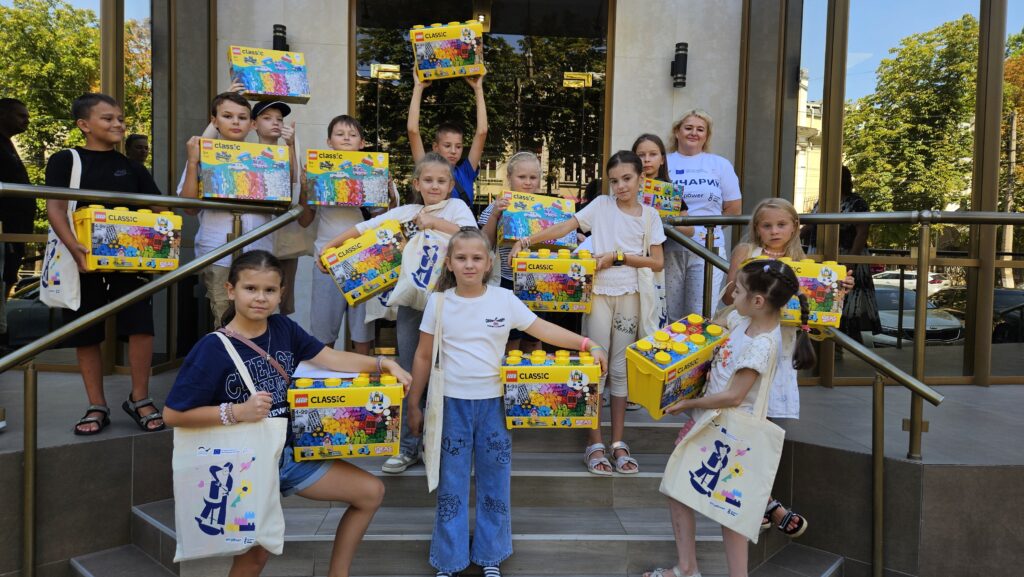
The lab combined learning with psychological support. Children were helped to overcome anxiety, communicate openly, build trust, and work in teams. According to the team, this approach became the key to success. During its work, the lab held 128 English lessons, 108 LEGO sessions, and 48 creative workshops. Yet, as the mentor notes, the most important outcomes were not numbers, but the changes within the children.
“Our goal wasn’t just to deliver a course. We wanted to create an environment where knowledge is combined with emotional safety — a place where children return not because they must, but because they want to. And it worked. Children who were once shy started performing in English in front of the class. Those who were afraid of new people became team leaders,” Tlumak explains.
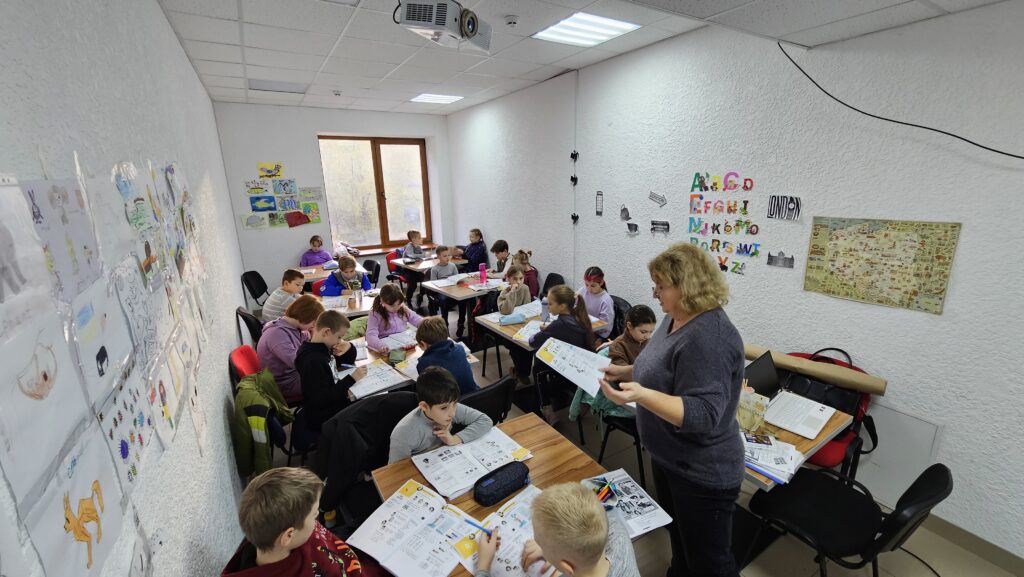
About a third of the participants were children who had moved to Mykolaiv from other regions of Ukraine. For many of them, Goncharyk became a place where they first felt stability and friendliness after displacement.
“Many of our participants are children who lost their homes. At first, they were withdrawn, but later they began to smile, joke, and build LEGO cities together with local children. They started to trust people again. And that’s the main meaning of our work,” says Kateryna.
One of the team’s goals was to change children’s perception of education — to show that learning can be engaging, interactive, and meaningful.
“We gave children the sense that learning is freedom, not obligation. English became a tool to discover the world, LEGO — a way to think like an engineer and collaborate, and creative workshops — a space to express themselves. It was education through play, through experience, through life,” Tlumak notes.
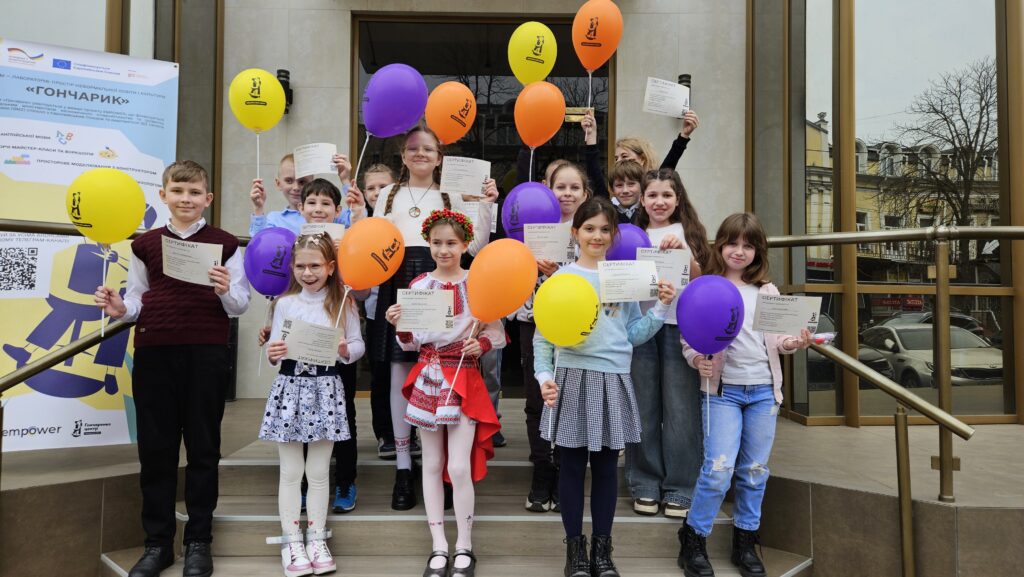
According to the mentor, the experience of Goncharyk became valuable not only for children but for the entire community. Mykolaiv now has a new educational model — flexible, adaptive, and focused on development and emotional well-being.
“We proved that even in wartime it’s possible to create innovative solutions. Free high-quality education, modern methods, and care for children’s emotional health should become the new standard. We’re happy that this experience can now be shared with other centers and schools,” concludes Kateryna Tlumak.